

| InBio Going to BAT! |
|
Basophil and mast cell activation tests (BAT/MAT) have gained momentum as the next generation of allergy diagnostic tests. Technological advances in flow cytometry, together with streamlined assay protocols, have enabled BAT to become more widely available as a measure of in vitro biologic activity, for use in clinical trials and as a potential alternative to food challenge tests. For the first time, EAACI guidelines recommend BAT to be added to the list of diagnosis tests for IgE-mediated food allergy.
All InBio products are manufactured under ISO-9001:2015 certified Quality Management System. These allergen products can be supplemented with human IgE monoclonal antibodies (hIgE mAb) as quality controls to standardize BAT and MAT systems (See Smith et al, Front Allergy 2023). |
| Significance of BAT in Allergy |
| BAT is a cellular assay that measures the activation of basophils, following stimulation with specific allergens. Use of whole blood for BAT mimics the clinical phenotype of sensitized patients by assessing IgE affinity and avidity, as well as other soluble components (eg, IgG4, cytokines). Providers can use BAT to confirm the diagnosis and identify patients at high-risk of developing severe reactions, providing a more detailed risk assessment to patients. BAT assays can also be used for monitoring the effectiveness of immunotherapies and standardizing their administration. |
| Molecular Peanut Composite |
| Improving In-Vitro Allergy Diagnostics |
|
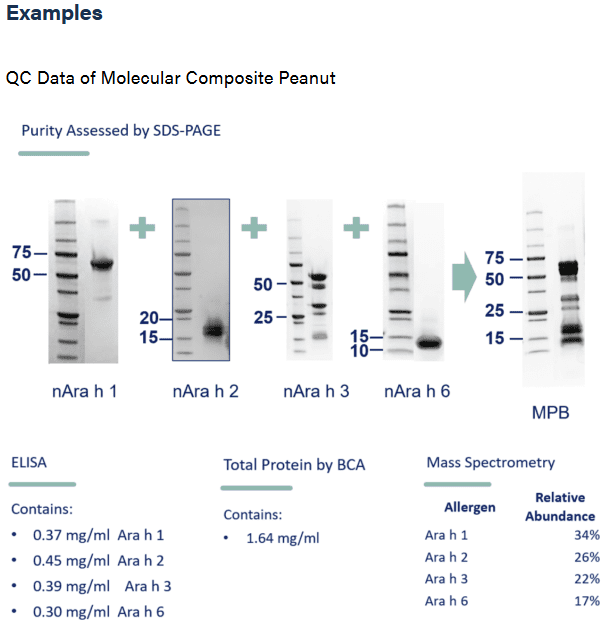
Peanut extracts are routinely used for allergy diagnostics. However, allergen extracts contain mixtures of allergenic and non-allergenic substances with variable allergen composition which may complicate clinical interpretation, as evidenced by several food diagnostic extract recalls (watch an InBio webinar on the topic here). InBio has manufactured a standardized molecular composite of peanut (MCP) with high concentrations of purified natural allergens: Ara h 1, Ara h 2, Arah 3, and Ara h 6, formulated in equimolar amounts. The MCP is manufactured under an ISO-9001:2015 certified Quality Management System and should improve the diagnostic efficacy of in-vitro IgE tests and could provide an alternative to allergen extracts for allergy diagnostics. Representative quality data below: |
 |
| Food Protein Standards! |
| With Defined Allergen Composition |
|
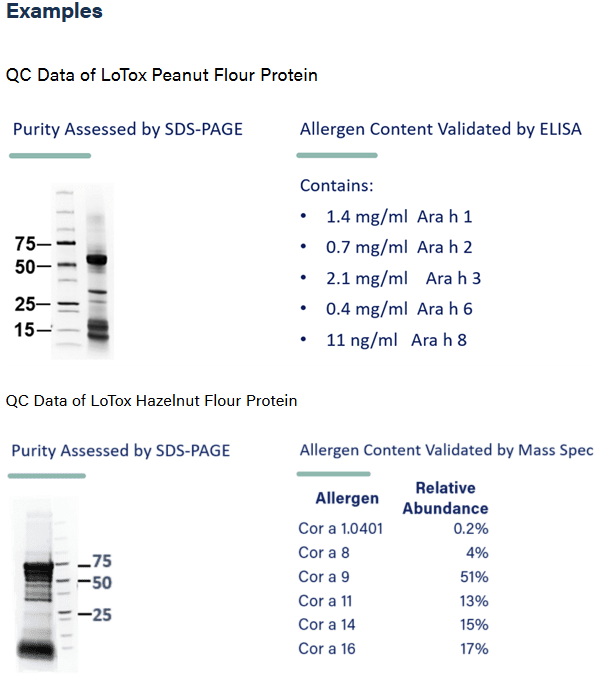
The need for standardized reagents in BAT assays is paramount. Too often, allergen extracts are variable in protein concentration or not even known. InBio aims to help researchers and companies in food allergy by developing a proprietary line of well-characterized, LoTox™ Food Protein Standards, including cashew, hazelnut, peanut, pea, and pistachio, with the more in the pipeline! How are InBio’s Food Protein Standards used?
What are InBio Food Protein Standards?
|
 |
Saremo presenti il 6 novembre e l'11 dicembre a Milano, vieni a trovarci!