Neuropeptides
Neuropeptides constitute the most extensive and structurally diverse class of signaling molecules in the nervous system, functioning not only as classical neurotransmitters but also as neuromodulators, local autocrine/paracrine regulators, and systemic hormones. Their broad roles reflect complex biosynthesis, processing, release, receptor interaction, and physiological impact.
Biosynthesis and Processing:
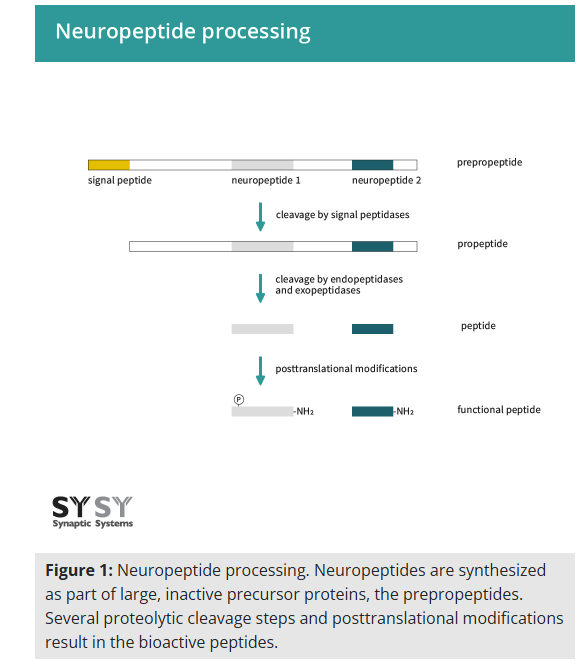
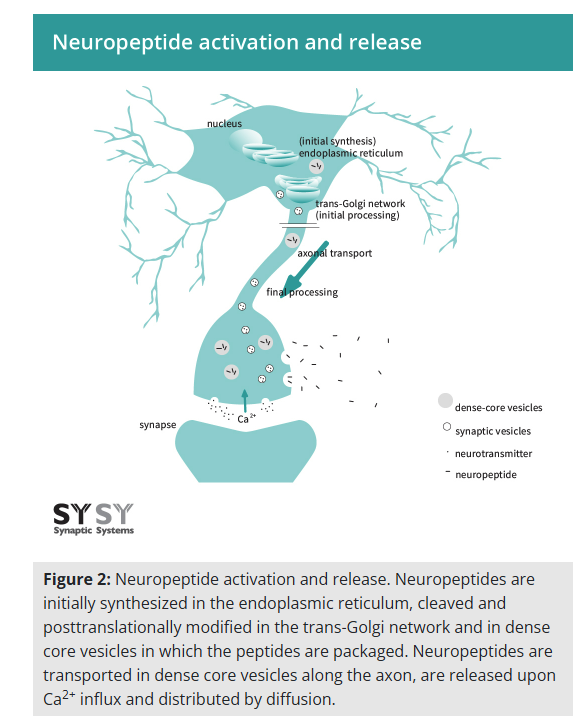
These peptides are initially synthesized as large precursor proteins (prepropeptides) that undergo signal peptide cleavage, endopeptidase/exopeptidase proteolysis, and multiple post-translational modifications in the endoplasmic reticulum and trans-Golgi network. The most frequent modification is C-terminal amidation, crucial for bioactivity.
Release Mechanisms:
Neuropeptides are packaged into dense-core vesicles and released via calcium-dependent exocytosis. Unlike classical neurotransmitters, they are often released at sites distant from calcium influx foci and are not subject to rapid reuptake, leading to durable extracellular presence and volume transmission over nm to mm scales.
Receptor Activation:
Signal transduction is mediated primarily through high-affinity G protein-coupled receptors (GPCRs). This receptor class enables neuropeptides to modulate second messenger systems across neural and non-neuronal tissues.
Processing Diversity:
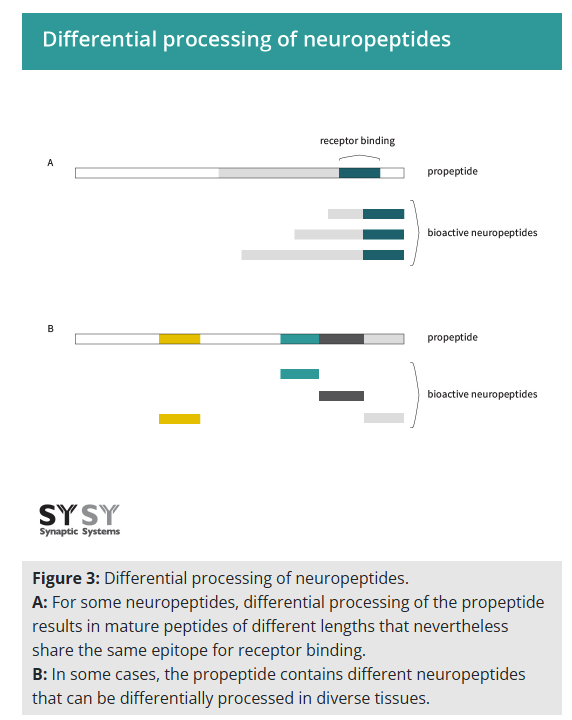
Single neuropeptide genes can yield multiple mature peptides through alternative splicing and differential post-translational processing. This diversity enhances functional specificity even among peptides derived from the same precursor.
Physiological Functions:
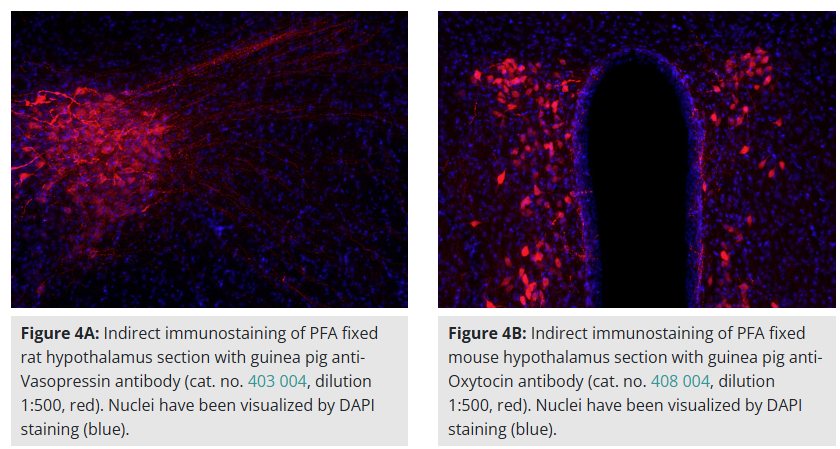
Neuropeptides modulate a wide array of physiological processes. Exemplars include vasopressin and oxytocin in water balance and reproductive function, substance P and CGRP in nociception, and neuropeptide Y in appetite regulation. These molecules operate both within the central nervous system and peripherally, affecting endocrine, autonomic, and behavioral functions.
Clinical and Therapeutic Relevance:
The extensive repertoire of neuropeptides and their receptors presents rich opportunities for therapeutic targeting. Notable advances include monoclonal antibody antagonists of CGRP signaling for migraine prophylaxis and ongoing efforts to modulate neuropeptide systems in metabolic and psychiatric disorders.
Products Neuropeptides and Peptide Hormones
Synaptic Systems offers a great variety of products related to neuropeptides and peptide hormones.
| 452 005 |
ACTH, Guinea pig, polyclonal, affinity purified |
| 438 004 |
CCK-8, Guinea pig, polyclonal, antiserum |
| 414 004 |
CGRP, Guinea pig, polyclonal, antiserum |
| 259 002 |
Chromogranin A, rabbit, polyclonal, antiserum |
| 259 003 |
Chromogranin A, rabbit, polyclonal, affinity purified |
| 259 103 |
Chromogranin B, rabbit, polyclonal, affinity purified |
| 529 004 |
CRF, Guinea pig, polyclonal, antiserum |
| 446 004 |
Galanin, Guinea pig, polyclonal, antiserum |
| 468 003 |
Chrelin, rabbit, polyclonal, affinity purified |
| 514 003 |
GIP, rabbit, polyclonal, affinity purified |
| 471 005 |
GLP-1, Guinea pig, polyclonal, affinity purified |
| 471 203 |
GLP-2, rabbit, polyclonal, affinity purified |
| 434 005 |
Neuropeptide S, Guinea pig, polyclonal, affinity purified |
| 394 004 |
Neuropeptide Y, Guinea pig, polyclonal, antiserum |
| 394 006 |
Neuropeptide Y, chicken, polyclonal, affinity purified |
And many others
DBA-ITALIA Srl
Via Umbria 10
20054 Segrate (Milano)
Tel. +39 02-26922300
If you no longer wish to receive these announcements
click here